Foreign Ministers’ Visit and High-Level Economic Engagement
2nd – 5th August 2026, New Delhi
India–Uzbekistan relations received fresh impetus with the visit of H.E. Mr. Bakhtiyor Saidov, Foreign Minister of the Republic of Uzbekistan, and the accompanying ministerial delegation led by H.E. Mr. Laziz Kudratov, Minister of Investment, Industry and Trade of the Republic of Uzbekistan, to India in August 2026.
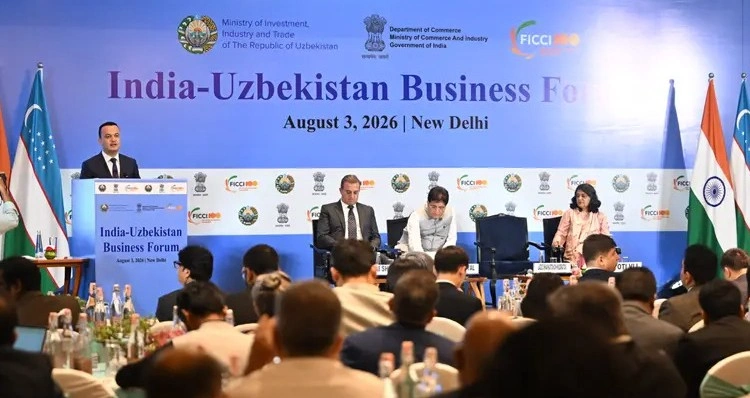
The ministerial delegation led a series of high-level economic and business engagements across New Delhi, Mumbai and Ahmedabad, bringing together senior government officials, strategic Uzbek institutions, leading Indian businesses and industry stakeholders to explore opportunities for expanding bilateral trade, investment and project-based cooperation. The engagements reaffirmed the commitment of both countries to deepen their strategic partnership and translate strong political relations into greater economic cooperation across trade, investment, infrastructure, manufacturing, energy, technology, mining and connectivity.
President Droupadi Murmu Highlights New Areas of India–Uzbekistan Cooperation
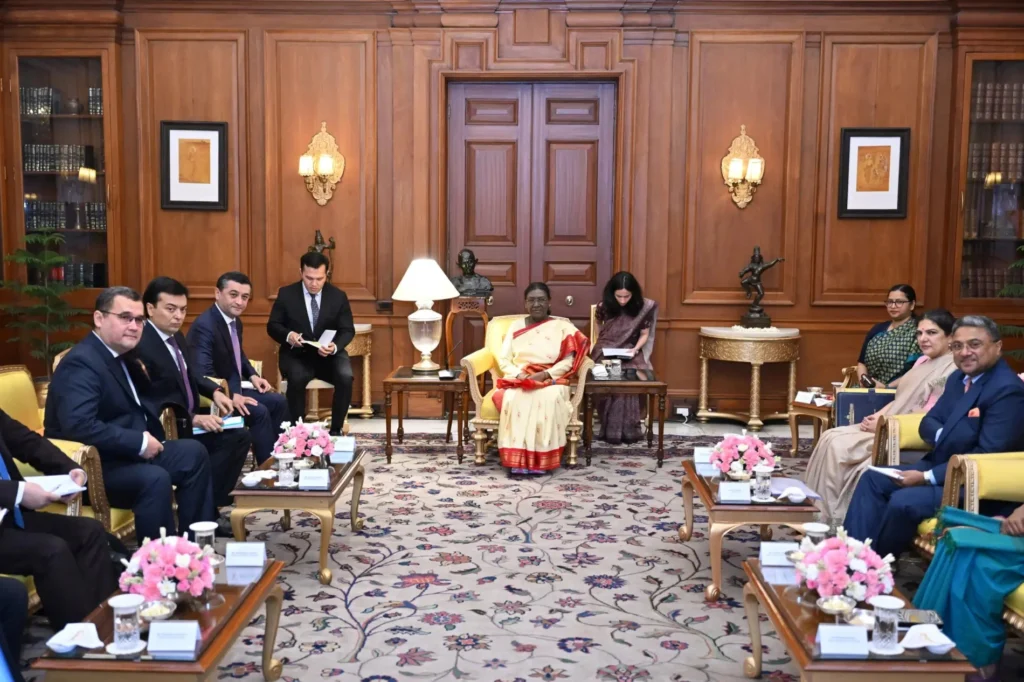
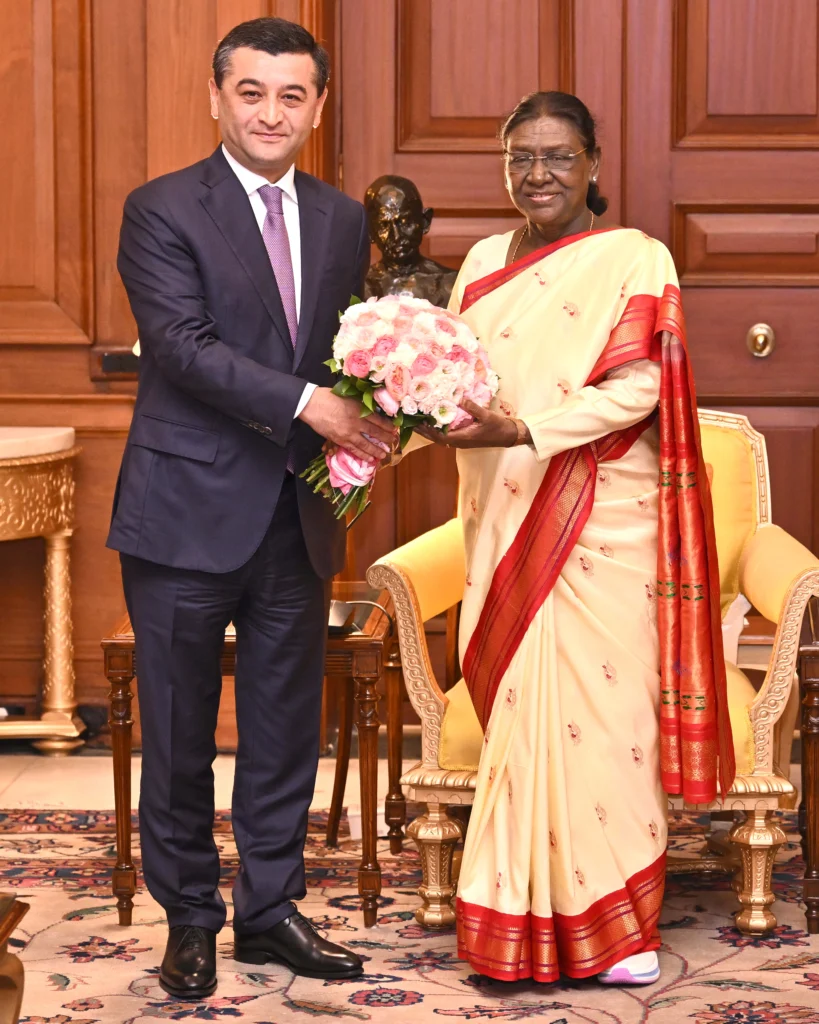
President Droupadi Murmu received H.E. Mr. Bakhtiyor Saidov, Foreign Minister of the Republic of Uzbekistan, at Rashtrapati Bhavan in New Delhi and discussed ways to further strengthen India–Uzbekistan bilateral relations. The discussions highlighted the deep historical, cultural and civilisational ties between the two countries, including their longstanding Silk Road connections. President Murmu emphasised the immense potential for cooperation in mining, particularly rare earth minerals, pharmaceuticals, agriculture and information technology, while also welcoming the growing economic and business engagement between the two countries.
Jaishankar and Saidov Review India–Uzbekistan Strategic Partnership
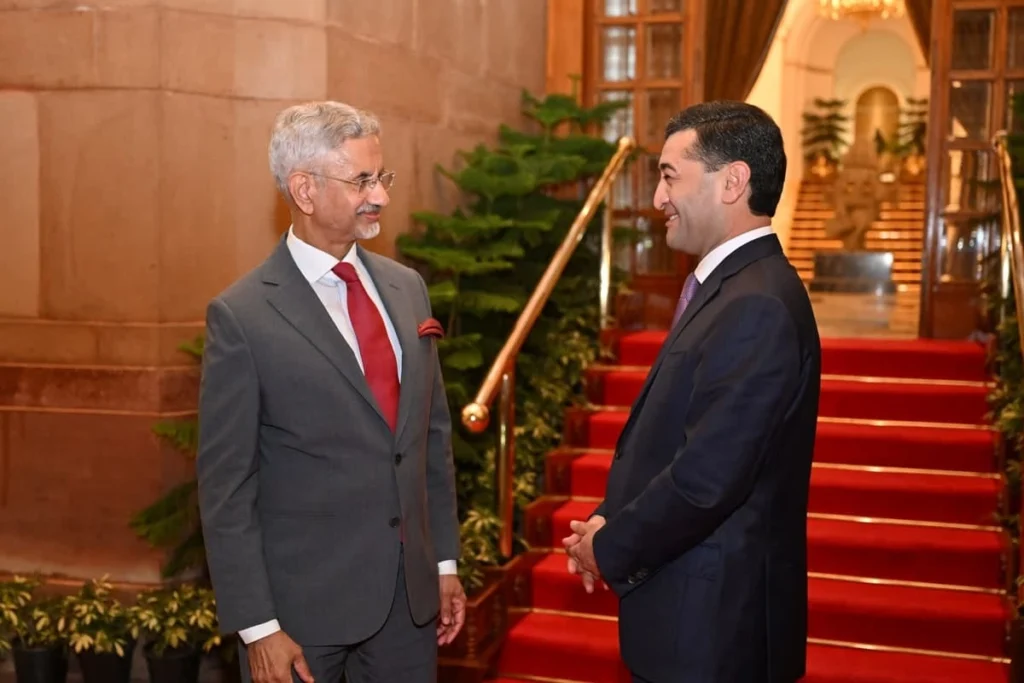
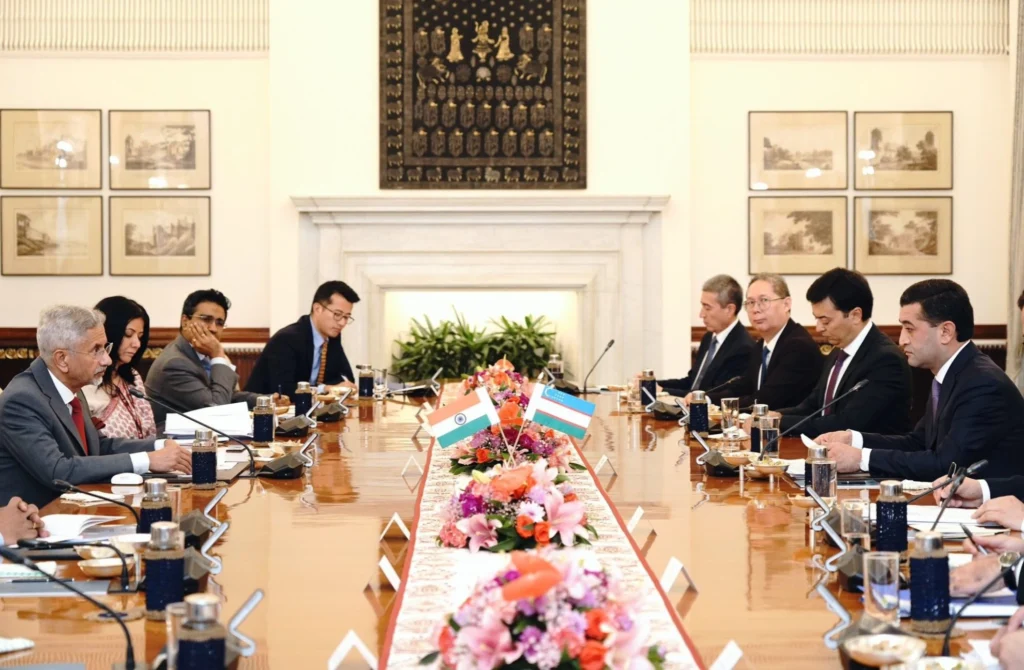
External Affairs Minister Dr. S. Jaishankar met H.E. Mr. Bakhtiyor Saidov, Foreign Minister of the Republic of Uzbekistan, in New Delhi in August 2026 to review the India–Uzbekistan Strategic Partnership. Their discussions covered the expansion of bilateral trade, economic and investment cooperation, energy and mining, transport and logistics connectivity, as well as regional and international developments. The two sides also discussed cooperation through international organisations, while India conveyed its support for Uzbekistan’s candidature to chair the Non-Aligned Movement (NAM) for 2027–2029 and appreciated Uzbekistan’s support for India’s initiatives in BRICS.
India–Uzbekistan Trade and Investment Agenda
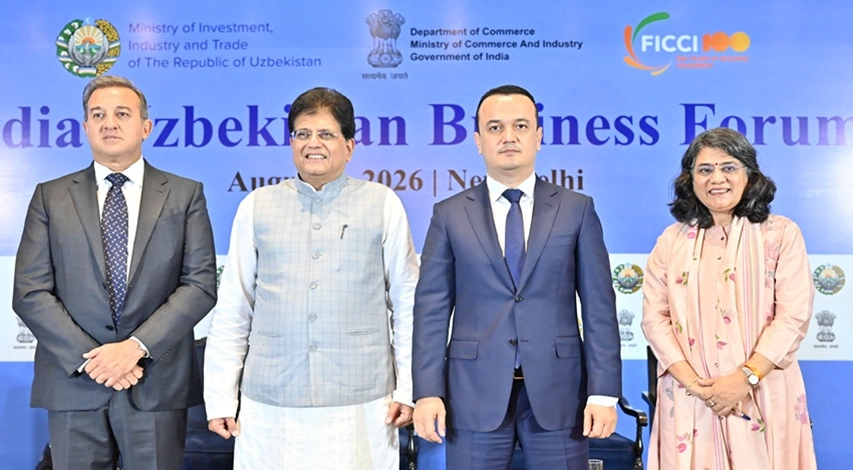
At the India–Uzbekistan Business Forum in New Delhi, Shri Piyush Goyal, Union Minister of Commerce and Industry, called for the two countries to double bilateral trade from the current level of approximately US1.5billiontonearlyUS3 billion within three years. He encouraged Indian and Uzbek businesses to co-invest, co-manufacture and leverage their complementary, non-competing strengths to access global markets.
The two countries could also explore the potential for an enhanced trade arrangement, including a possible Free Trade Agreement (FTA), which could provide an additional framework for facilitating market access, investment and long-term commercial partnerships.
The ministerial engagements across New Delhi, Mumbai and Ahmedabad provided an important platform to connect Uzbekistan’s development priorities with Indian industrial, technological, infrastructure and investment capabilities, while creating avenues for direct institutional and business-to-government engagement.
Priority Sectors for Cooperation and Investment
The composition of the Uzbek ministerial delegation reflects the breadth of sectors where Uzbekistan is actively engaging with international partners and where opportunities exist for Indian investment, technology collaboration, joint ventures and project-based cooperation.
Priority areas include energy and power generation, renewable energy and transmission infrastructure, mining and geology, critical and mineral resources, medical and pharmaceutical industries, healthcare infrastructure, information technology and digital services, thermal power, chemical industries, large-scale infrastructure and urban development, hydropower and pumped-storage power, manufacturing and industrial cooperation.
These sectors provide considerable scope for Indian companies to participate through investment, joint ventures, technology transfer, co-manufacturing, EPC and EPCF projects and long-term strategic partnerships. The presence of senior officials and heads of strategic Uzbek institutions provides an important platform for Indian businesses to understand sector-specific opportunities and engage directly with relevant decision-makers.
Uzbek Ministerial Delegation
The delegation further comprised senior Government officials and heads of strategic institutions, reflecting the Government of Uzbekistan’s focused approach towards sector-specific cooperation and investment facilitation.
The delegation included H.E. Mr. Umid Mahmudovich Mamadaminov, First Deputy Minister of Energy; H.E. Mr. Shokhrukh Khasanovich Gulamov, Deputy Minister of Investment, Industry and Trade; H.E. Mr. Ural Sadullayevich Yusupov, Deputy Minister of Mining Industry and Geology; Mr. Abdulla Abdisalamovich Azizov, Director, Agency for the Development of the Medical and Pharmaceutical Industry; Mr. Bahodir Ibragimovich Juraev, Chairman of the Management Board, JSC Thermal Power Plants; Mr. Odil Shukurovich Temirov, Chairman of the Management Board, JSC Uzkimyosanoat (Chemical Industry); and Mr. Azamat Odilovich Karamatov, Chief Executive Officer, IT Park Uzbekistan.
The participation of senior officials from energy, mining, pharmaceuticals, IT, thermal power and chemical industries creates significant scope for direct institutional engagement between Indian businesses and Uzbek Government bodies and strategic enterprises, particularly in investment, technology partnerships, manufacturing and infrastructure development.
Hydropower and Energy Cooperation
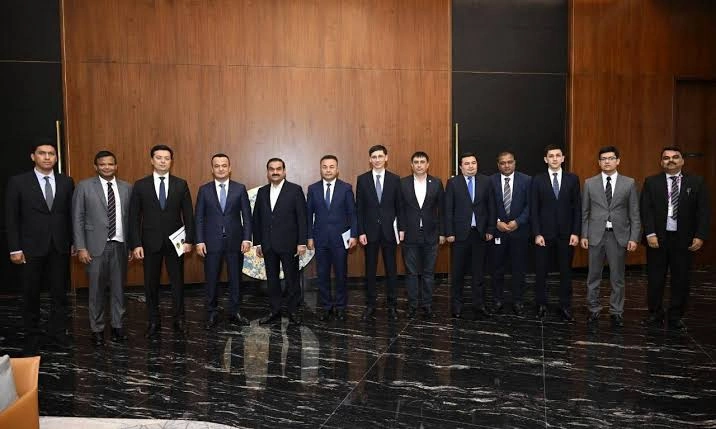
H.E. Mr. Laziz Kudratov also engaged with leading Indian businesses during the delegation’s programme in India, including engagements in Ahmedabad with the Adani Group.
The Ahmedabad discussions focused on potential collaboration in hydropower, including the adoption of modern technologies, development of new energy facilities and mutually beneficial investment projects.
Adani Group Founder Gautam Adani expressed strong interest in investing in promising projects for the development of new hydropower and pumped-storage power plants in Uzbekistan. Such engagements underline the potential for greater Indian private-sector investment in Uzbekistan’s energy and infrastructure development and demonstrate the scope for long-term cooperation between major Indian enterprises and Uzbek institutions.
People-to-People Links as a Strategic Asset
Education and capacity building remain important foundations of bilateral relations. President Droupadi Murmu noted that more than 3,000 Uzbek officials, professionals and students have benefited from India’s ITEC training courses and scholarship programmes, while more than 16,000 Indian students are pursuing higher studies in Uzbekistan. These educational connections serve as important bridges between the two societies and strengthen people-to-people understanding.
GTTCI Engages Uzbekistan Ministerial Delegation on New Investment Opportunities
GTTCI–RVNL Meeting with Uzbekistan Ministerial Delegation Led by H.E. Mr. Laziz Kudratov
As part of the engagements during the visit of the Uzbekistan ministerial delegation to New Delhi, RVNL, along with GTTCI, held a meeting with the delegation led by H.E. Mr. Laziz Kudratov, Minister of Investment, Industry and Trade of the Republic of Uzbekistan.
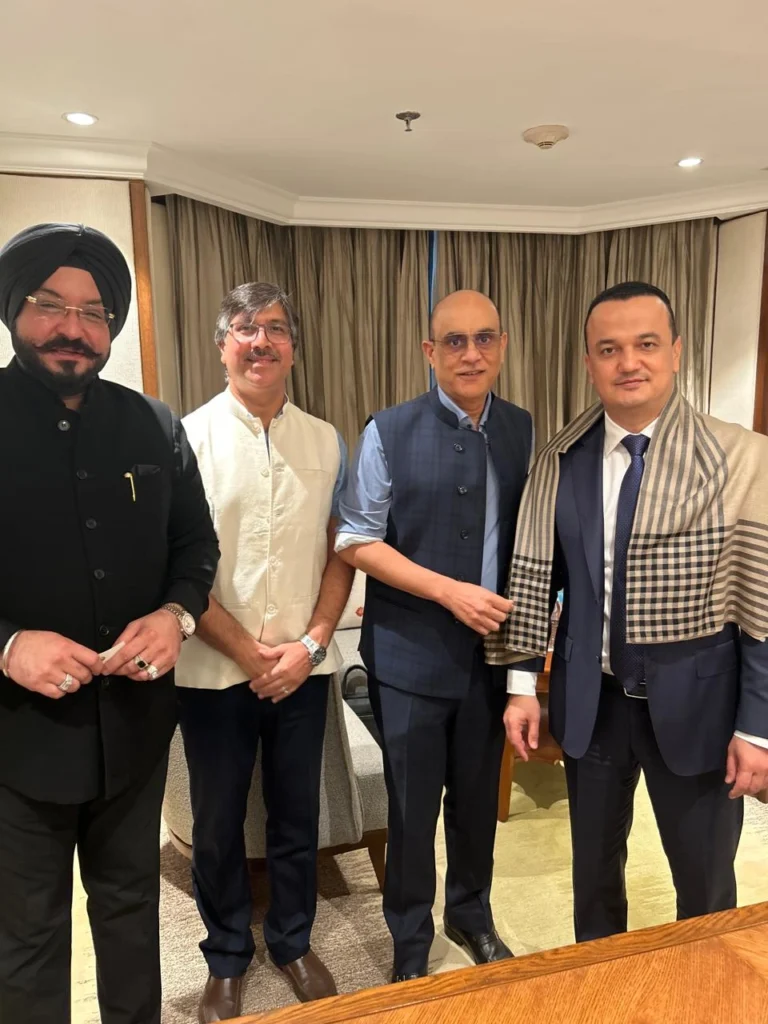
The meeting focused on identifying projects aimed at developing Uzbekistan’s infrastructure, facilitating greater Indian investment in Uzbekistan, and establishing avenues for Government-to-Government (G2G) and Business-to-Government (B2G) cooperation.
From RVNL, the meeting was attended by Mr. Saleem Ahmad, Chairman, RVNL, and Mr. Baldev S. Jaryal, Executive Director – Business Development, RVNL. Representing GTTCI were Dr. Gaurav Gupta, Founder President, GTTCI, and Dr. Jaspreet Singh Bindra, Founder Board Member, GTTCI.
The discussions explored potential cooperation in railway connectivity, solar power transmission lines, toll road development, coal blocks and other strategic infrastructure projects, with a focus on identifying opportunities where Indian infrastructure capabilities and investment can contribute to Uzbekistan’s development priorities. The engagement also provided a platform to explore institutional linkages and project opportunities that can strengthen India–Uzbekistan economic cooperation and facilitate greater participation of Indian companies in Uzbekistan.
GTTCI–NBCC Meeting with Uzbekistan’s Ministerial Delegation
As part of the ministerial delegation’s engagements in New Delhi, NBCC, along with GTTCI, held a meeting with H.E. Mr. Laziz Kudratov, Minister of Investment, Industry and Trade of the Republic of Uzbekistan. The interaction focused on exploring opportunities for Indian infrastructure and construction expertise to contribute to Uzbekistan’s urban and regional development plans.
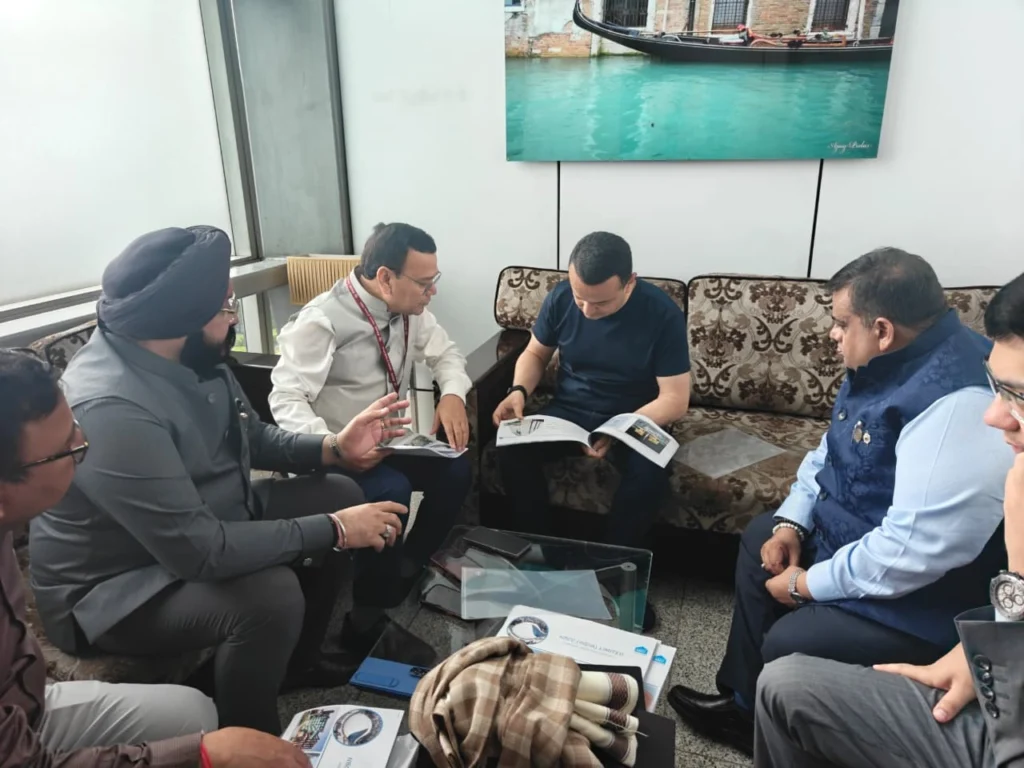
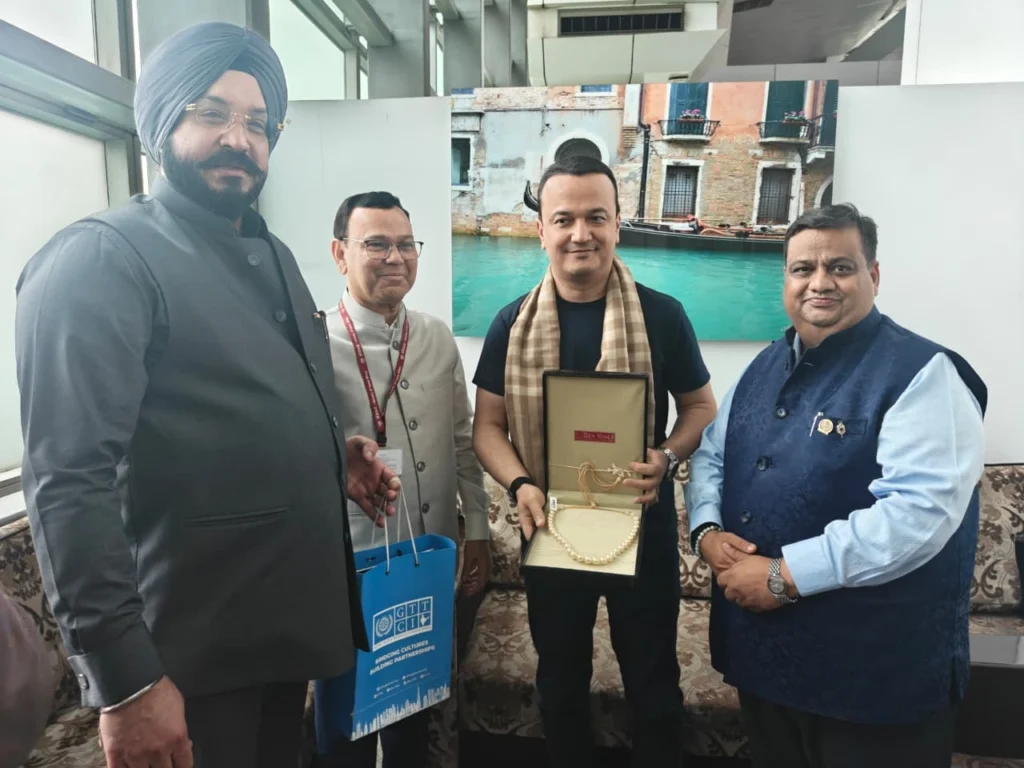
Representing NBCC were Mr. Suman, Director Commercial; Mr. Rakesh Roshan, General Manager; Mr. Vineet Gupta, Deputy General Manager; and Mr. Abhishek Kumar Singh, Chief General Manager. From GTTCI, the delegation comprised Dr. Gaurav Gupta, Founder President, GTTCI; Dr. Jaspreet Singh Bindra, Founder Board Member, GTTCI; and Mr. Shubham Gupta, Director, GTTCI.
Exploring EPC, EPCF and PMC Opportunities
Discussions centred on potential collaboration under Engineering, Procurement and Construction (EPC), Engineering, Procurement, Construction and Financing (EPCF), and Project Management Consultancy (PMC) models. These frameworks can enable Indian companies to participate across the complete project lifecycle, combining technical expertise, project execution capabilities, construction expertise and financing solutions.
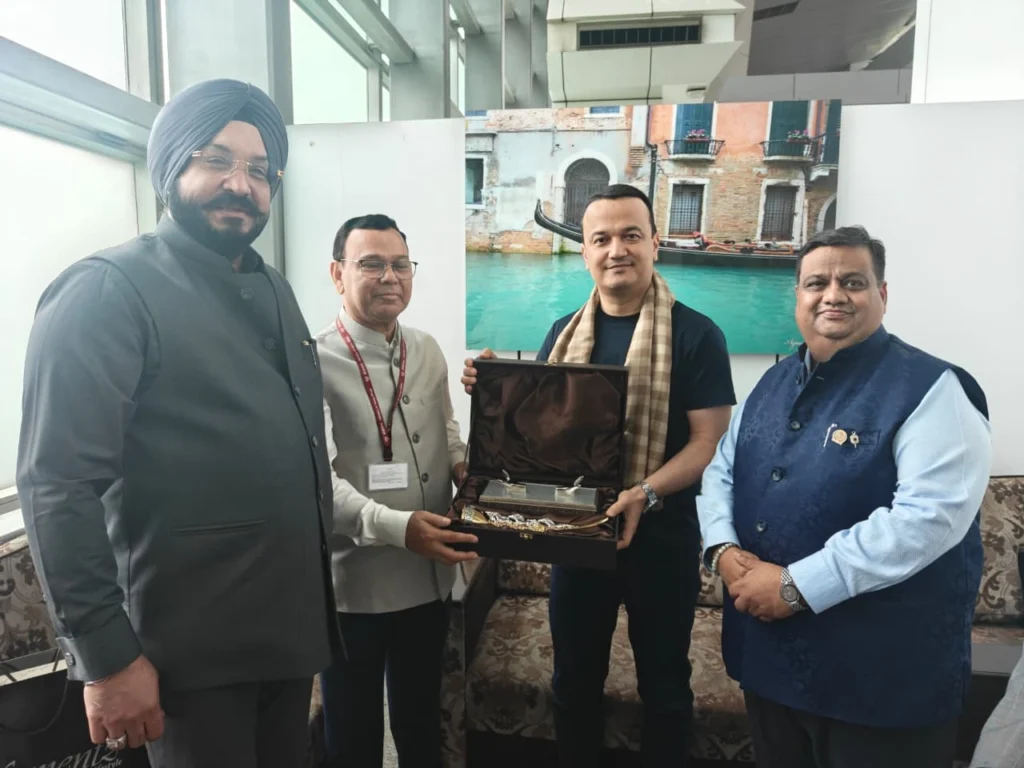
Particular attention was given to development opportunities associated with New Tashkent City and Samarkand, two important centres of Uzbekistan’s urban and economic development. The discussions explored how Indian infrastructure and construction expertise could contribute to large-scale urban development, project planning, construction and associated infrastructure requirements.
The engagement highlighted the potential for stronger institutional and commercial cooperation between Indian public-sector infrastructure organisations and Uzbek authorities, while creating avenues for Indian companies to participate in major infrastructure and urban development projects.
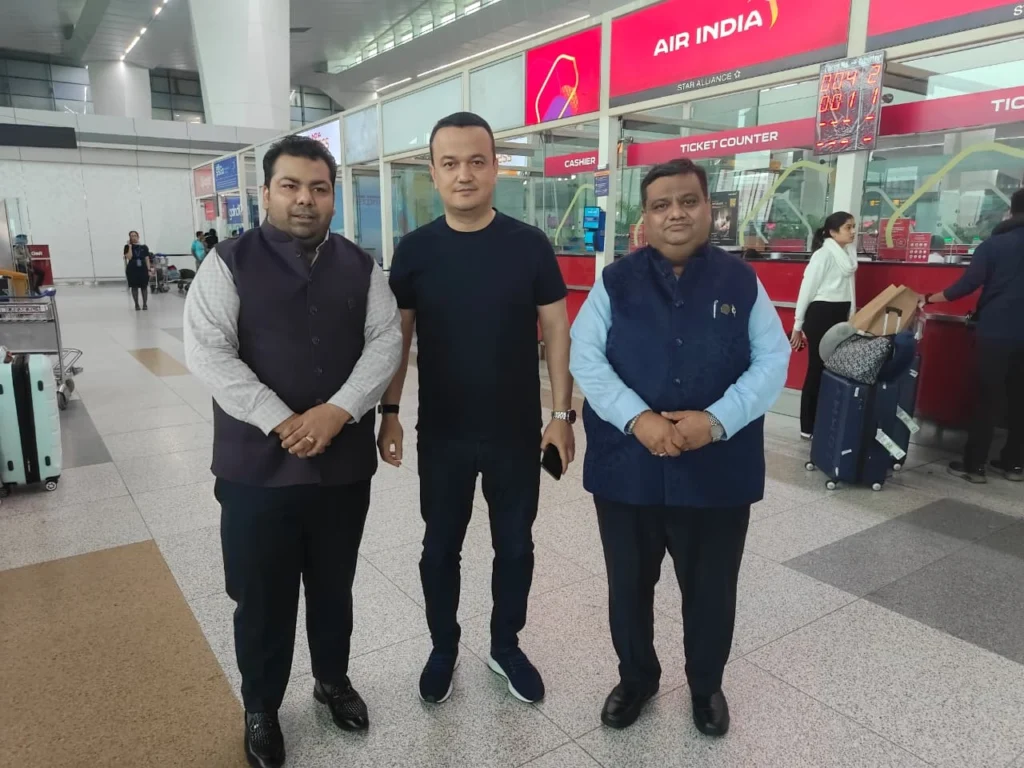
Strengthening G2G and B2G Cooperation
The engagements involving GTTCI, RVNL and NBCC, alongside the Uzbekistan ministerial delegation and senior officials from key strategic institutions, reflect the importance of creating structured platforms for G2G and B2G cooperation.
The presence of senior officials responsible for energy, mining, pharmaceuticals, IT, thermal power and chemicals provides Indian businesses with direct avenues to understand Uzbekistan’s sectoral priorities and explore investment and project opportunities.
GTTCI’s role in facilitating these engagements is focused on connecting Indian institutions, infrastructure companies and businesses with international governments and decision-makers, identifying project opportunities and creating pathways for investment and commercial cooperation. By bringing together Uzbek Government institutions with leading Indian infrastructure and business organisations, these engagements can facilitate Indian investment into Uzbekistan, technology partnerships, joint ventures, co-manufacturing, EPC and EPCF projects and long-term institutional cooperation.
A Broader Vision for India–Uzbekistan Relations
The August 2026 engagement demonstrates that India–Uzbekistan relations are entering a phase of deeper and more diversified economic cooperation. Political dialogue is increasingly being complemented by business engagement, investment opportunities, infrastructure partnerships, energy cooperation, connectivity initiatives and technology collaboration.
With the shared objective of substantially increasing bilateral trade, including the ambition to reach nearly US$3 billion within three years, there is considerable scope for both countries to strengthen trade facilitation, encourage co-investment and co-manufacturing, explore enhanced trade arrangements and develop projects that leverage the complementary strengths of Indian and Uzbek businesses.
The extensive participation of senior Uzbek Government officials, strategic institutions, Indian public-sector enterprises and leading businesses creates a strong foundation for concrete projects, increased investment flows, G2G and B2G partnerships, technology collaboration and long-term commercial opportunities, further strengthening the economic dimension of the India–Uzbekistan strategic partnership.