Unlocking Markets, Skills, and the Future of India–EU Economic Partnership
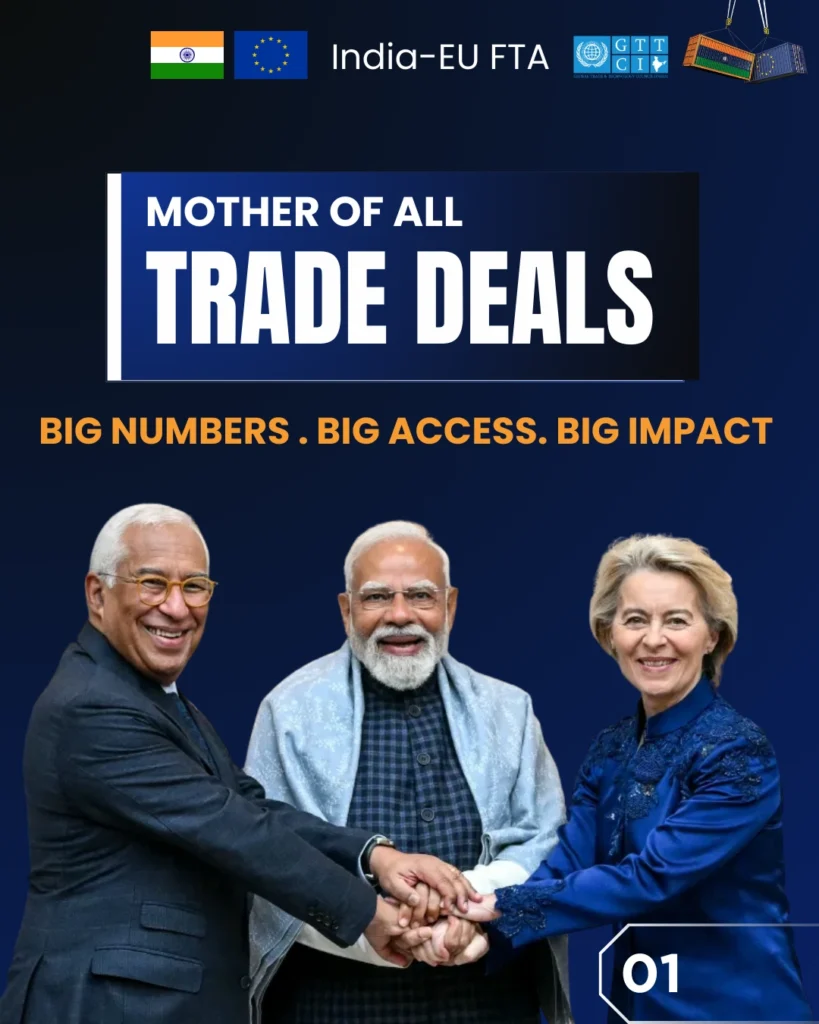
The India–EU Free Trade Agreement (FTA) marks a historic milestone in global trade, bringing together the world’s 2nd and 4th largest economies. Accounting for nearly one-third of global trade and catering to around 25% of global GDP, this landmark pact is set to redefine economic engagement between India and the European Union.
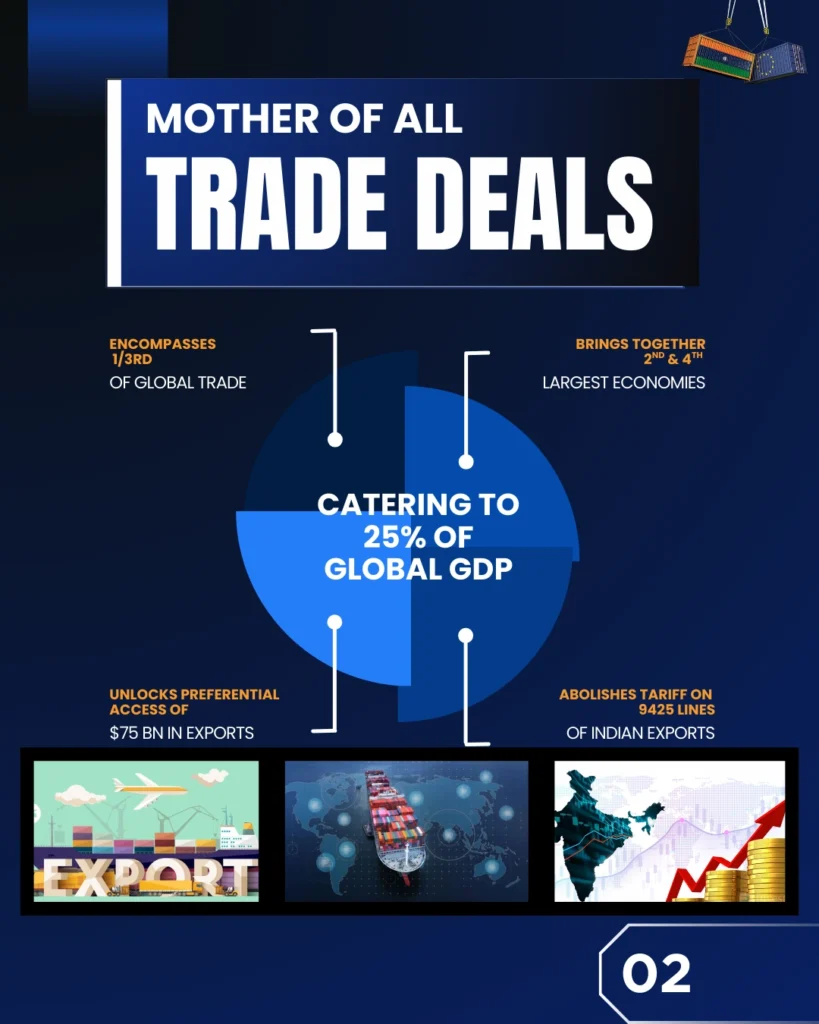
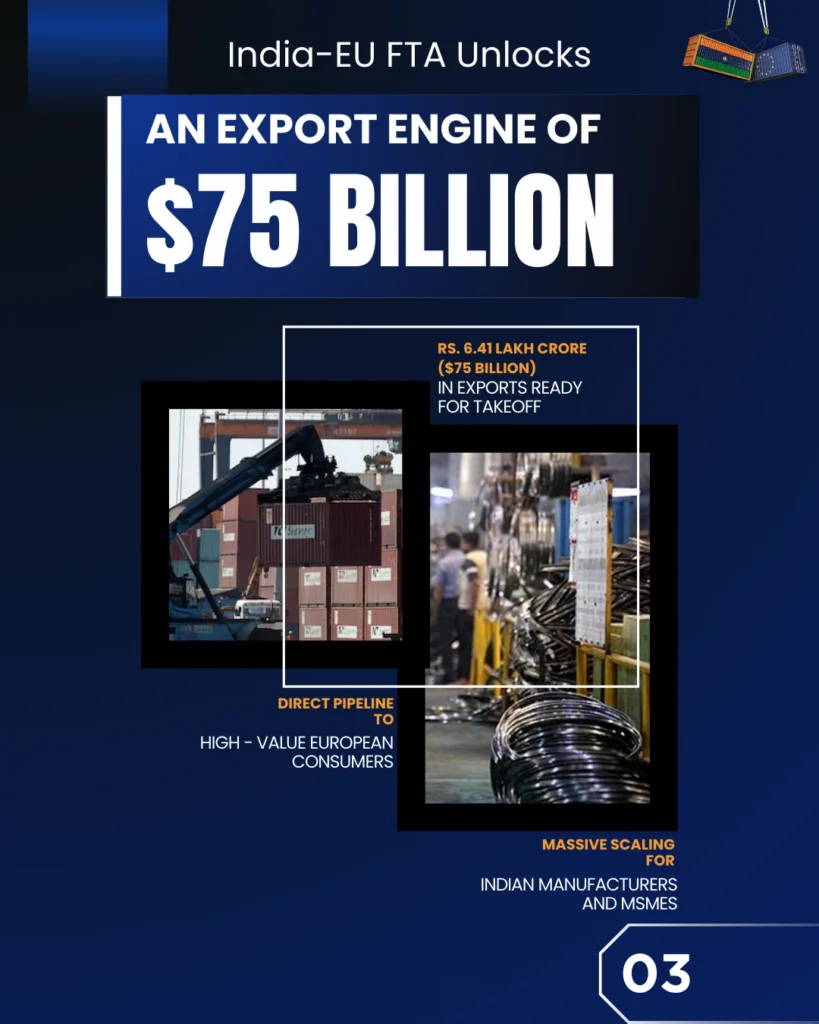
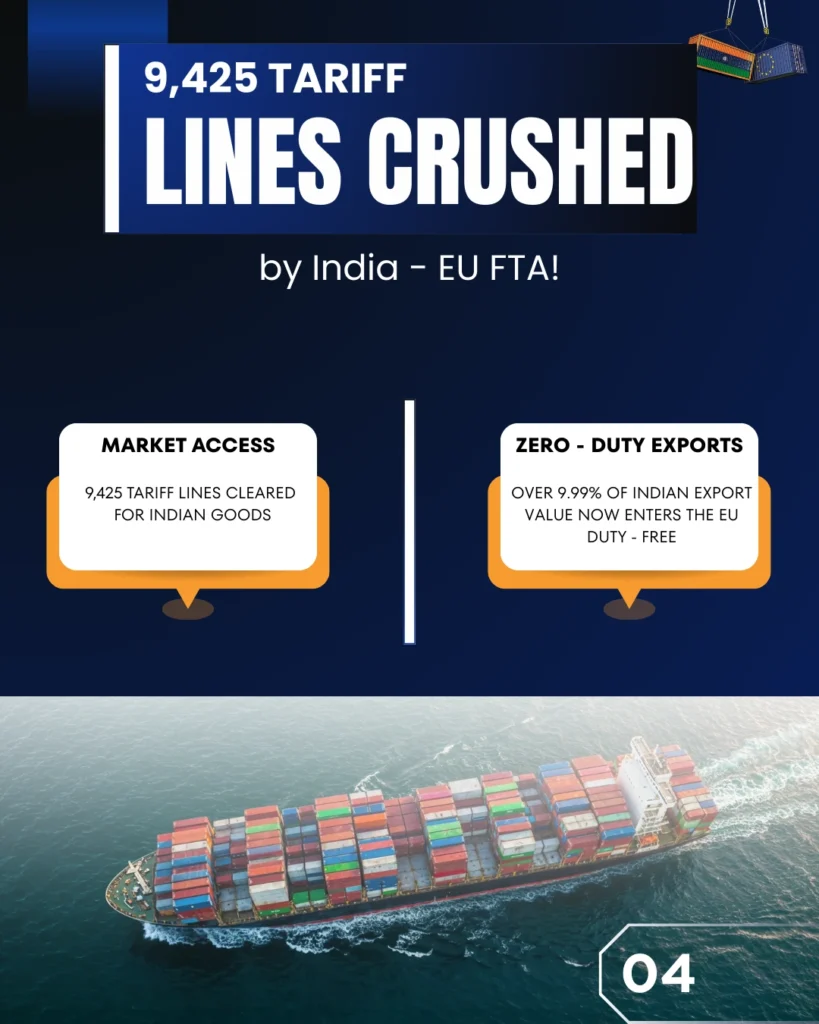
At the heart of the agreement lies a powerful export opportunity. With exports valued at ₹6.41 lakh crore (approximately USD 75 billion) ready for take-off, the FTA unlocks preferential access for Indian goods to high-value European consumers. A major breakthrough comes with the abolition of tariffs across 9,425 product lines, enabling over 9.99% of India’s export value to enter the EU market duty-free. This zero-duty access creates a direct pipeline for Indian manufacturers and MSMEs to scale operations, enhance competitiveness, and integrate deeply into global value chains.
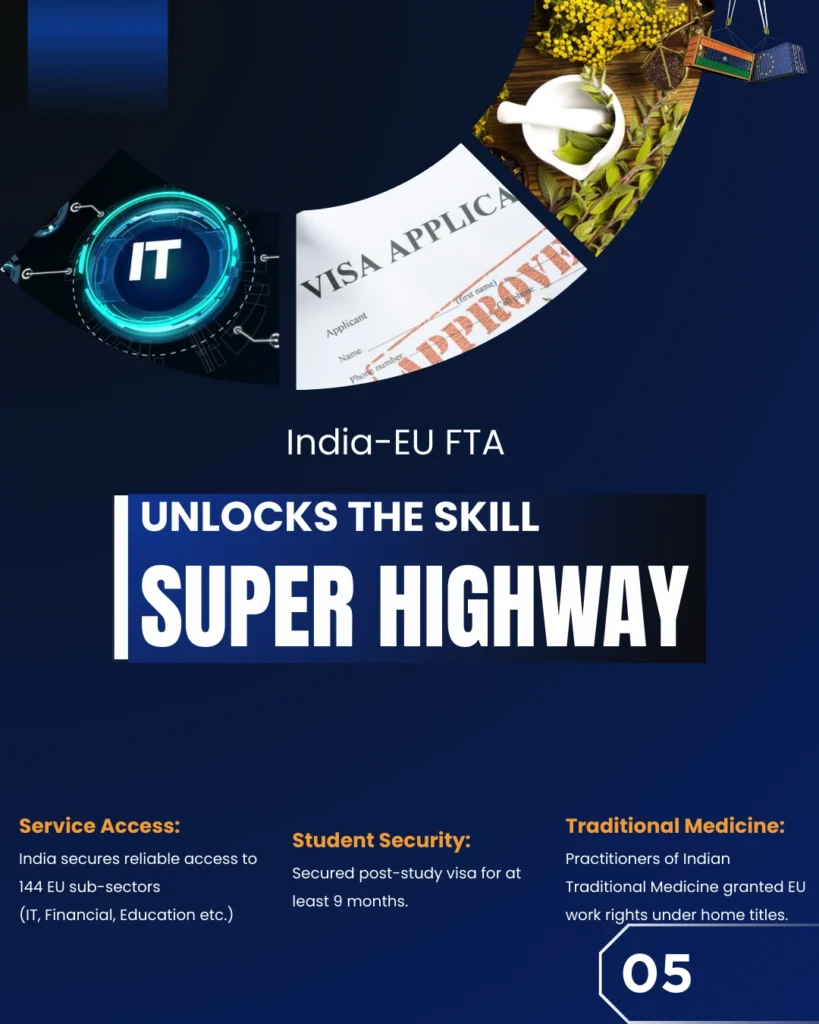
Beyond goods, the agreement opens a super-highway for services and skills. India has secured reliable access to 144 EU services sub-sectors, including IT, financial services, and education. Students benefit from post-study visa security of at least nine months, while practitioners of Indian traditional medicine gain EU work rights under their home-country professional titles.
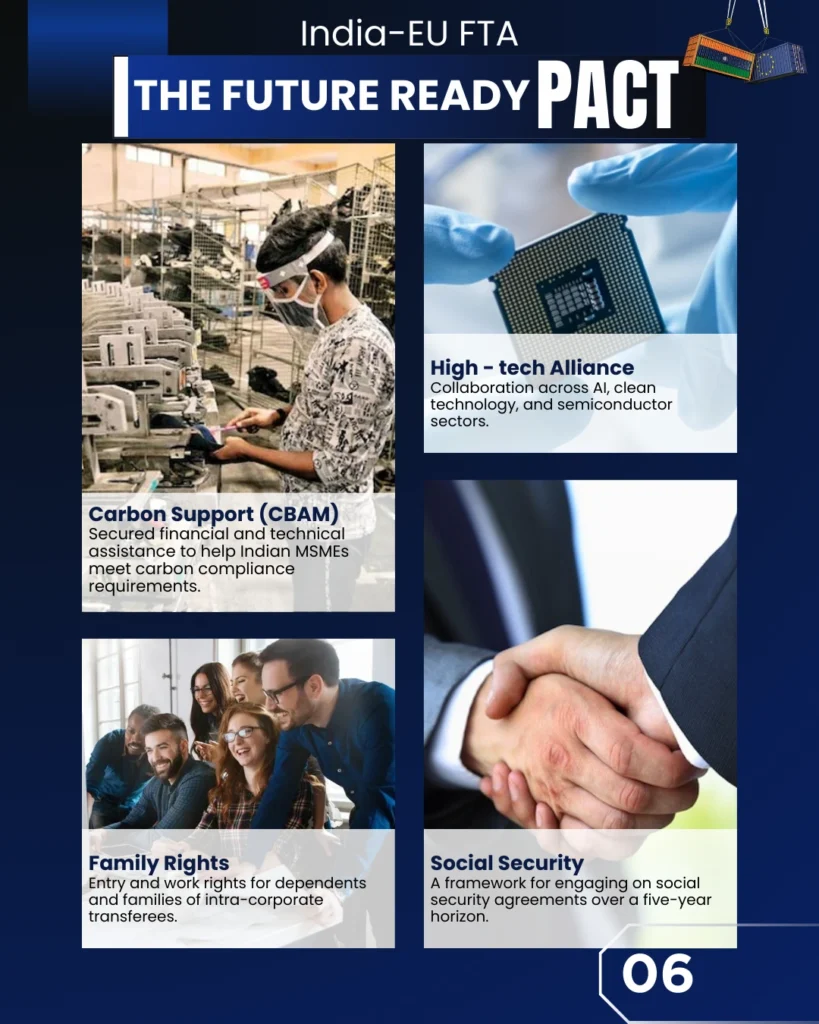
Crucially, the FTA is future-ready. It provides financial and technical support to help Indian MSMEs comply with carbon border adjustment requirements, ensuring sustainability does not become a trade barrier. Strategic cooperation in artificial intelligence, clean technology, and semiconductors positions both partners at the forefront of high-tech innovation. Additionally, provisions covering entry and work rights for families of intra-corporate transferees and a five-year framework for social security agreements reflect a people-centric approach.
Overall, the India–EU FTA stands as a transformative trade pact—driving exports, empowering MSMEs, advancing technology collaboration, and building a resilient, future-oriented economic partnership.