PM Modi’s State Visit Marks a Landmark Milestone in Trade, Technology, Energy and Strategic Cooperation
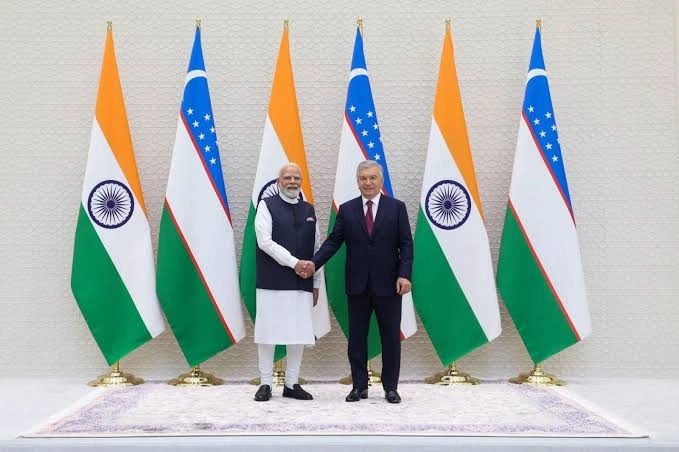
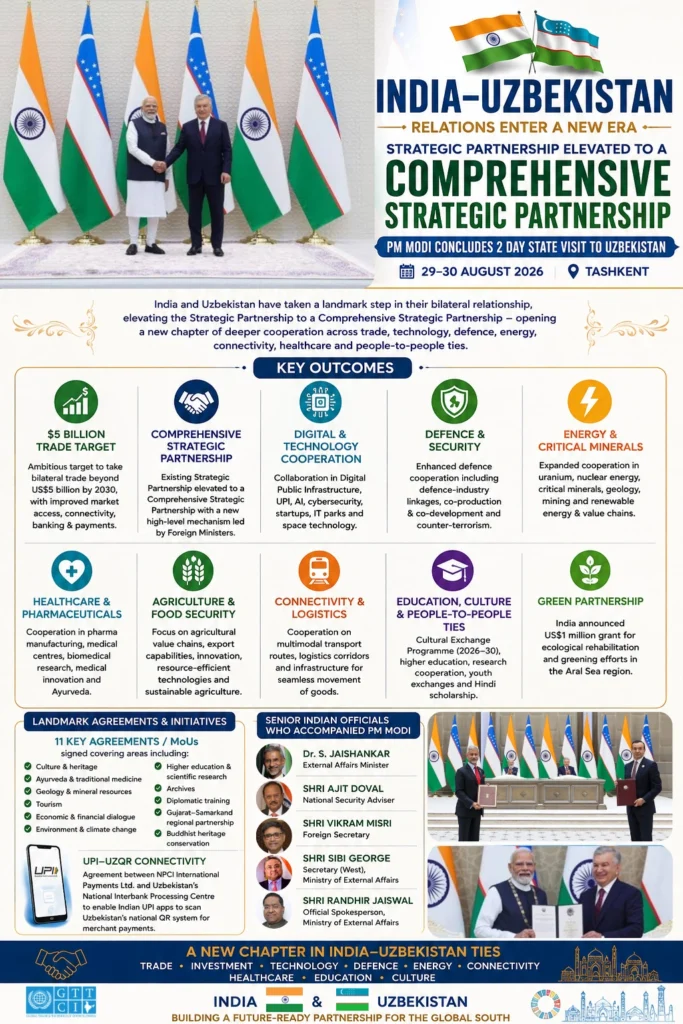
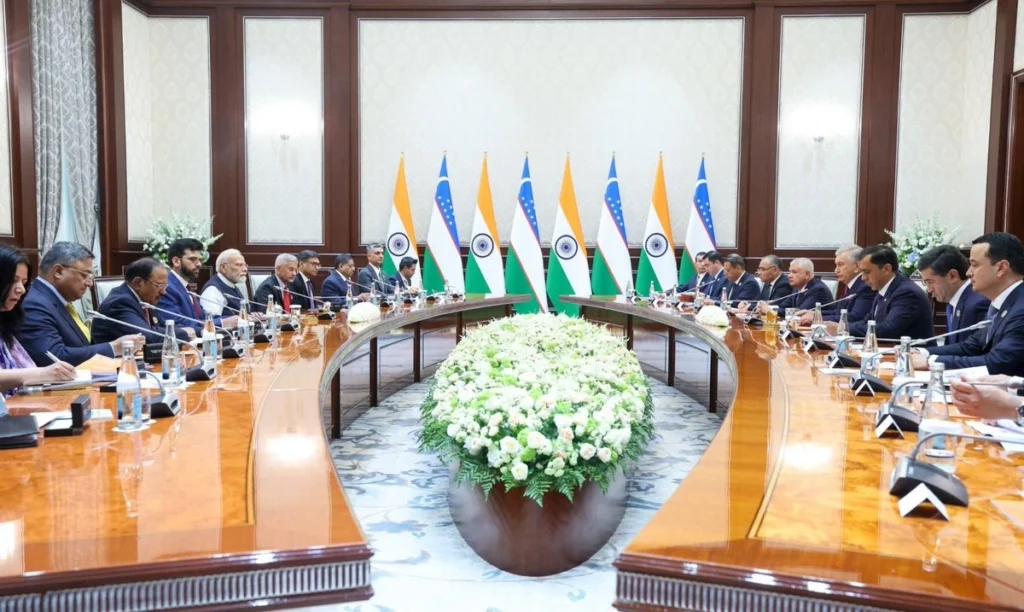
Prime Minister Narendra Modi’s 29–30 August 2026 state visit to Uzbekistan marked a landmark milestone in India–Uzbekistan relations. During his visit to Tashkent, India and Uzbekistan elevated their Strategic Partnership to a Comprehensive Strategic Partnership, reflecting the growing depth and breadth of bilateral cooperation. The new framework brings greater focus to trade, investment, digital technology, defence, energy, healthcare, connectivity, education, culture and sustainable development.
Key Pillars of the Comprehensive Strategic Partnership
$5 Billion Trade Target
India and Uzbekistan have set an ambitious goal of taking bilateral trade beyond US$5 billion by 2030. Improved market access, banking and payment systems, connectivity and stronger business-to-business engagement will support greater commercial exchanges and investment opportunities.
Comprehensive Strategic Partnership
The elevation of bilateral ties establishes a broader framework for long-term cooperation. It brings economic, diplomatic, security, technological and people-centric priorities together while strengthening institutional mechanisms and high-level engagement between the two countries.
Digital & Technology Cooperation
Digital cooperation has emerged as a significant pillar, covering Digital Public Infrastructure, UPI, artificial intelligence, cybersecurity, startups, IT parks and space technology. A landmark UPI–UZQR arrangement is set to facilitate convenient digital merchant payments and strengthen digital connectivity between the two economies.
Defence & Security
India and Uzbekistan are expanding defence cooperation through defence-industry linkages, co-production and co-development, military engagement and greater security collaboration. Both countries are also working together to address terrorism, transnational organised crime and other emerging security challenges.
Energy & Critical Minerals
Energy and resource security form an important component of the upgraded partnership. Cooperation in uranium, nuclear energy, critical minerals, geology and mining is being expanded, creating opportunities across resource development, renewable energy and strategic value chains.
Healthcare & Pharmaceuticals
The two countries are expanding cooperation in pharmaceutical manufacturing, medical centres, biomedical research, medical innovation and Ayurveda. This provides opportunities for greater institutional collaboration as well as stronger engagement between healthcare and pharmaceutical industries.
Agriculture & Food Security
Agricultural cooperation focuses on value chains, export capabilities, innovation and resource-efficient technologies. These areas can contribute to enhanced productivity, sustainable agriculture and stronger food-security cooperation between India and Uzbekistan.
Connectivity & Logistics
India and Uzbekistan are placing greater emphasis on multimodal transport routes, logistics corridors and infrastructure. Enhanced connectivity can facilitate the movement of goods, support trade expansion and strengthen India’s economic engagement with Uzbekistan and the wider Central Asian region.
Education, Culture & People-to-People Ties
The partnership continues to build on longstanding civilisational connections through higher education, scientific research, youth exchanges, scholarships, Hindi language promotion and cultural exchanges. Cooperation on preserving Buddhist heritage further highlights the historical and cultural links between the two nations.
Green Partnership
Sustainable development is also becoming an important dimension of bilateral cooperation. India announced a US$1 million grant for ecological rehabilitation and greening efforts in the Aral Sea region, reflecting India’s support for environmental restoration and climate-conscious development.
Landmark Agreements & Initiatives
The visit witnessed 11 key agreements and MoUs covering culture and heritage, Ayurveda, geology and mineral resources, tourism, economic and financial dialogue, environment and climate change, higher education and scientific research, archives, diplomatic training, the Gujarat–Samarkand regional partnership, and Buddhist heritage conservation.
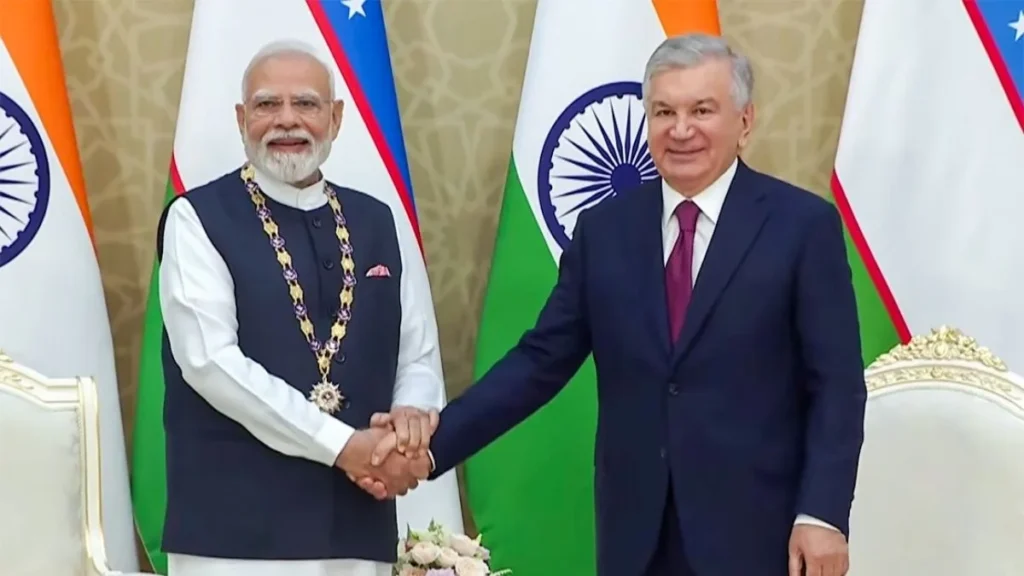
PM Modi Receives Uzbekistan’s Highest State Honour
A significant highlight of the visit was the conferring of Uzbekistan’s highest state honour for foreign leaders upon Prime Minister Narendra Modi—the Order of Oliy Darajali Do‘stlik. The honour recognises his contribution to strengthening India–Uzbekistan friendship and advancing bilateral cooperation.
Senior Indian Officials Accompanying PM Modi
The Indian delegation included Dr. S. Jaishankar, External Affairs Minister; Shri Ajit Doval, National Security Adviser; Shri Vikram Misri, Foreign Secretary; Shri Sibi George, Secretary (West), Ministry of External Affairs; and Shri Randhir Jaiswal, Official Spokesperson, Ministry of External Affairs.
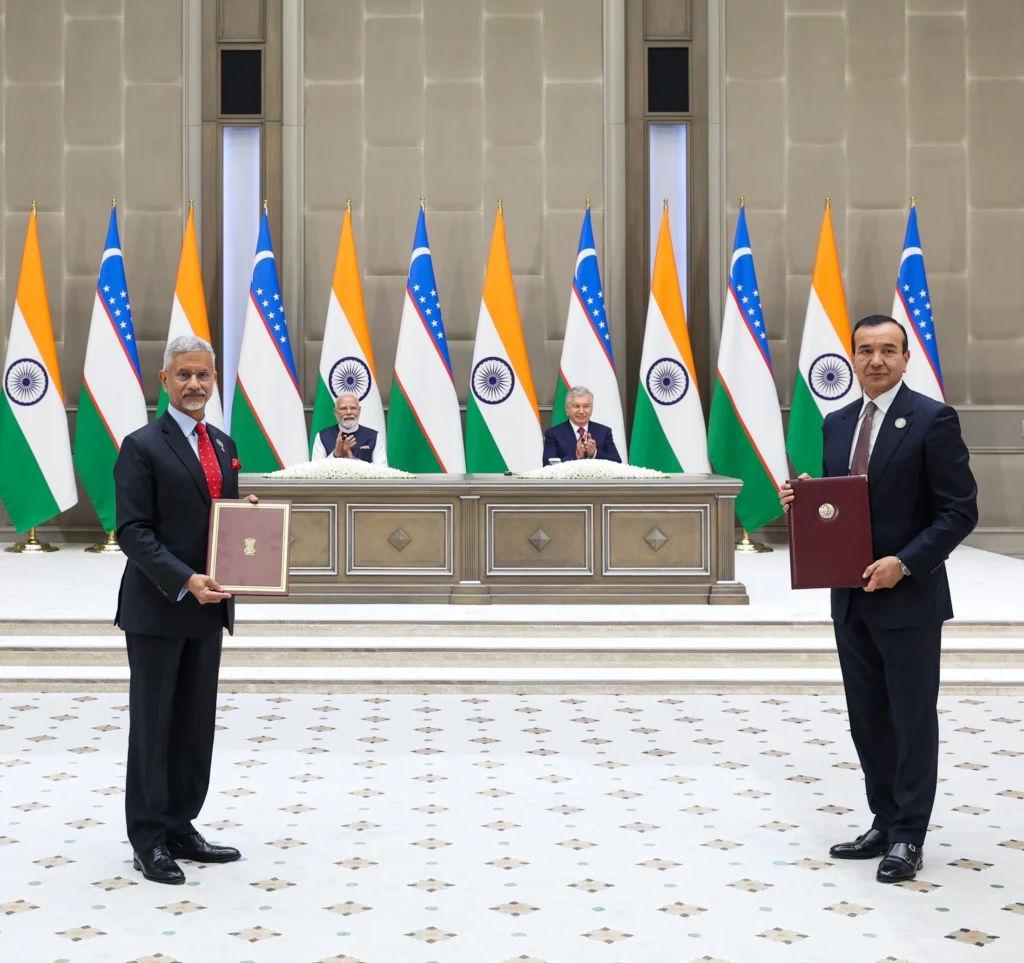
A Landmark Milestone in India–Uzbekistan Relations
The 2026 state visit has established a new and more comprehensive framework for India–Uzbekistan cooperation. From the US$5 billion trade ambition and digital connectivity to defence, critical minerals, healthcare, education, culture and environmental cooperation, the upgraded partnership reflects the shared vision of building stronger economic and strategic ties and advancing collaboration across the Global South.